
Adapting Our CSE Program for Adolescents with Autism in Madagascar

Updated: Jun 15

We're proud to be scaling our comprehensive sexuality education (CSE) program across Madagascar's national school system, bringing it to thousands of adolescents across the country.
But we're equally committed to reaching young people who have traditionally been left out of formal schooling in Madagascar. That includes adolescents with autism.
For any young person, CSE is essential. For autistic youth, it's even more so.
In Madagascar, parents often have few tools or resources to support their autistic children through adolescence. There's also a cultural stigma around their physical, emotional, and social development.
Furthermore, "Autistic adolescents — regardless of gender — are at higher risk of experiencing violence," says Saraha, our Learning and Safeguarding Lead. "Understanding different types of relationships — who is a trusted person, an acquaintance, or a stranger — can be very difficult for them. And when they have limited verbal abilities or struggle to describe what happened to them, reporting abuse becomes even harder."
Ensuring this population could access our program mattered deeply to us, but it would require a thorough review and adaptation of every component to ensure its accessibility and relevance.
Five Pillars of a Major Adaptation
From July to November 2025, we undertook a comprehensive review and redesign of our program for adolescents with autism. We brought together a remarkable team of experts in supporting autistic youth, including parents, educators, and volunteers from the Fédération Autisme Madagascar and the association Autisme Madagascar.
1. Restructuring the Curriculum for Autistic Adolescents
Revisiting our curriculum with this new learner profile in mind, we realized we needed to add some foundational concepts — things that may come naturally to neurotypical youth, but may be more challenging for some young people with autism.
In addition to reorganizing the logical flow of curriculum topics, we introduced prerequisite building blocks: for instance, understanding the human body, identifying emotions, and the concept of relationship circles. That last element proved especially crucial for addressing boundaries and healthy relationships.
2. Language and Pedagogical Adaptations to Support Understanding
We rewrote instructions in simpler, more concrete, more direct language. "A key learning for our team was not to assume that anything is obvious. Things that seem self-evident to the person writing the content may not be at all to an autistic adolescent," reflects Saraha. We removed metaphors, double meanings, and abstract phrasing, replacing complex concepts with concrete scenarios drawn from the daily lives of autistic youth.
One of the most significant changes was the systematic development of new visual tools across all modules — pictograms, photographs, and videos specifically designed to meet the cognitive and pedagogical needs of autistic adolescents.

3. Individualizing Pedagogical Approaches to Account for Diverse Learner Profiles
Our original curriculum is highly student-centered, built around participatory, activity-based learning.
However, cognitive, sensory, and social profiles vary enormously among adolescents with autism. An activity that supports learning and self-expression for one student may trigger sensory overload, confusion around unspoken rules, or withdrawal in another.
We adapted our approach so that activities become flexible pedagogical tools, used according to each student's specific needs. Educators are encouraged to adjust based on the characteristics of each group.
We also trained educators to understand and assess the individual profiles of the adolescents they work with before sessions begin. They were trained and equipped to use CAPP-type assessments, which help educators form groups of students with similar characteristics — creating learning environments that are consistent, safe, and well-matched to participants' needs.
4. New Tools and Training Modules for Educators Working with Autistic Adolescents
We strengthened our training for educators to prepare them to deliver the CSE program. This included more theoretical content on topics like self-confidence as a through-line for building self-esteem and self-advocacy in autistic adolescents, and background knowledge in how autistic youth experience social interaction such as gestural imitation, joint attention, and theory of mind.
"Even though I've been working in the autism field for several years, I still learned a lot and was able to deepen my knowledge in areas I thought I already understood." – Educator in a center for autistic youth who participated in the training
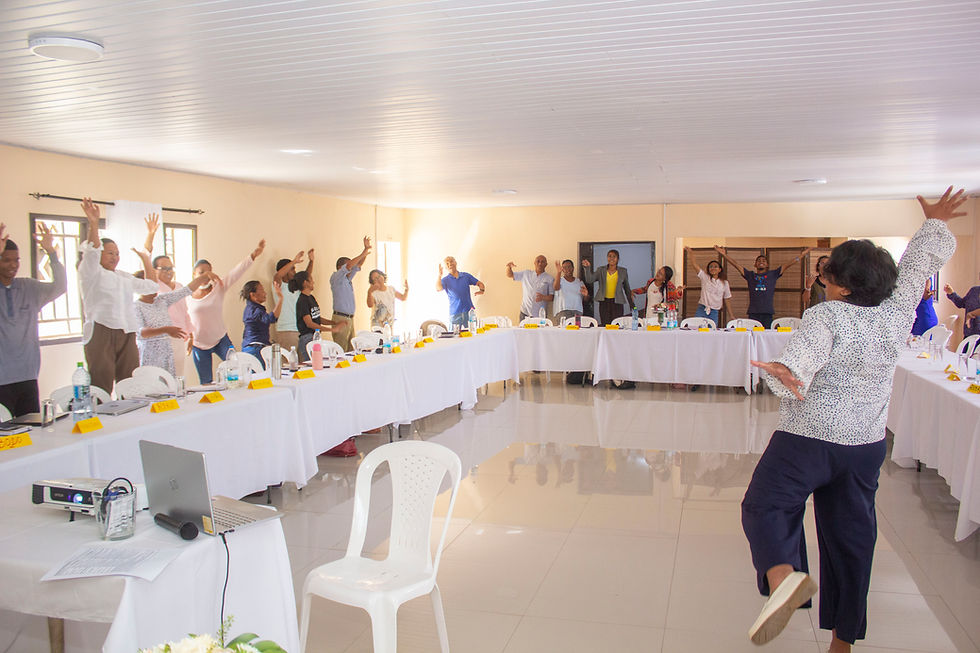
While most educators approached the program with enthusiasm, we are cognizant that it represents additional responsibilities for staff who are already stretched thin. So we also developed new tools — including a personal reflection journal for educators — to better support their well-being.
5. Greater Integration of Parents

Parents obviously play a vital role in their children's positive development — and that's especially true for autistic youth. Many of the themes in our curriculum can and should be reinforced at home. That's why, alongside the in-center program, we created take-home worksheets that educators can send back with students. These recap the key messages from each lesson and offer practical activities that caregivers can do to support continued learning at home.
"I understand my child better now. I know what I can do alongside the educators. I have a lot of hope right now — I really believe in this program." — Parent of an autistic child who participated in curriculum co-creation workshops
What's Next
After months of consultations, revisions, feedback rounds, and training, the adapted program is now in a pilot phase with more than 100 autistic adolescents across educational centers.
The feedback we're receiving gives us confidence in the program's continued expansion and offers clear direction for how to keep improving it. Building on the results from our center-based program, we're now exploring the possibility of developing a home-use toolkit that parents and guardians could facilitate themselves to reach adolescents who don't attend centers.
"This education will help autistic young people build confidence in themselves. I hope it will help them understand that they are strong, and that they are full, whole people." — Parent of an autistic child who participated in curriculum co-creation workshops
This adaptation process has been a rich source of learning for Projet Jeune Leader. "Many of the adaptations we developed have strengthened our program as a whole, and will help us reach other vulnerable groups of young people," says Saraha. For example, the educator reflection journal will be integrated into how we support CSE teachers in public middle schools. The simplified language and increased use of visual supports also open new doors to reach out-of-school youth and young people with low literacy, for example.
Charlotte, a member of the project team, captures what drives us forward: "No matter who the adolescent is, we want every young person in Madagascar — with or without a disability, urban or rural, in school or not — to have access to a program that meets their fundamental human needs and helps them thrive." We're getting closer, one step at a time!


