

INNOVATION SPOTLIGHT
“Positive Disruptions:” Shifting Attitudes in Support for Sexuality Education at the Community Level in Madagascar
Trust-building strategies CSE Educators use to build community support for sexuality education in Madagascar, captured through Collaborative Filmmaking
December 2023
The Starting Point
Comprehensive sexuality education is inherently sensitive — it means teaching young people about sex and relationships, a topic that can trigger resistance. Building public support is essential to delivering CSE at all, yet little evidence exists on how to actually shift community attitudes toward it.
In Brief
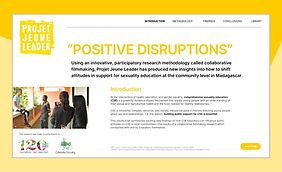
This interactive results brief shares new insights on how Projet Jeune Leader's CSE educators build community trust and support. Drawing on a research project where educators used collaborative filmmaking to document their own strategies, the brief identifies the specific approaches that shift attitudes towards support for CSE at the local level.
Key Takeaways
→ Educators build trust through two pathways: technical (demonstrating knowledge and reliability) and relational (deepening connection and reciprocity with community members).
→ Technical strategies include legitimizing their expertise and reinforcing the purpose of their work to local stakeholders.
→ Relational strategies involve closing the distance between educators and communities — integrating into local life until they become invested, trusted community members.
→ The right personal qualities matter as much as training the CSE Educators. In particular, open-mindedness, adaptability, confidence, and humility are core to earning community trust.


